

You have been told to get more fiber. Maybe a friend mentioned it, maybe you read it on a label, maybe you simply noticed that your plate is lighter on vegetables than it used to be. Then you turn over a gut health supplement and find psyllium husk listed among the enzymes and probiotics, and a fair question forms: why is a fiber sitting in a capsule formula at all?
Here is the plain-language answer — what psyllium is, what it does in the gut, why it is paired with probiotics and prebiotics, and the one habit that matters most when you take it.
What psyllium husk actually is
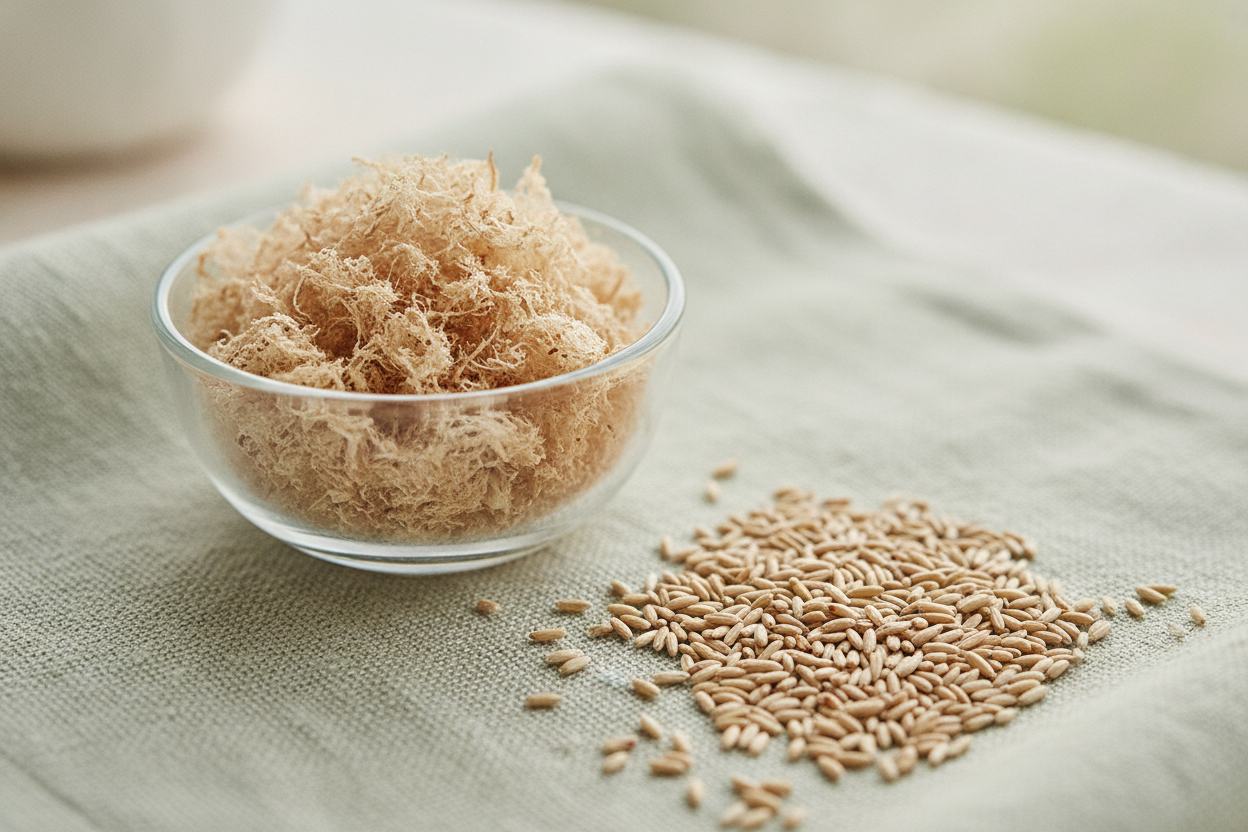
Psyllium comes from the seeds of Plantago ovata, a small plant grown mainly in India. The husk is the thin outer coating of the seed, and it is made up mostly of soluble fiber — the kind that absorbs water and swells into a soft gel.
That gel is the whole story. Unlike many fibers, psyllium is only lightly fermented by gut bacteria, so most of it stays intact as it moves through the digestive tract, holding on to water as it goes. It has been a familiar ingredient for generations, which is part of why you will recognise it from the fiber-supplement aisle.
What it does in the gut
Because psyllium holds water, it adds soft bulk to stool and helps keep its consistency comfortable. That is why it is so closely associated with regularity: it supports the normal, steady movement of things through the digestive tract rather than forcing anything.
A few practical points follow from how it works:
- It is gentle by design. Psyllium works mechanically, by holding water and adding bulk — not by stimulating the gut.
- It helps fill a common gap. Many adults eat less fiber than general dietary guidance suggests, and a daily source in a routine is a simple way to help cover the difference.
- It supports feeling satisfied. The gel it forms takes up space and slows things down a little, which is one reason fiber is often described as helping you feel full.
Why it sits next to probiotics and prebiotic FOS
In a well-built gut formula, psyllium is not working alone. In our Foundations gut formula it sits inside the VioraBiome™40 blend, alongside a 40-billion-CFU multi-strain probiotic blend and prebiotic FOS (fructooligosaccharides). Each one has a different job:
- Probiotics supply beneficial bacteria.
- FOS is a prebiotic — a fiber that beneficial bacteria readily ferment, so it acts as food for them.
- Psyllium is the structural fiber — it supports stool form and regularity, the comfortable, predictable part of digestion people notice day to day.
Put together, that is what is called a synbiotic approach: bacteria, something for them to eat, and a fiber that supports the rhythm of the whole system. It is the reason the fiber is in the formula rather than left to a separate tub on the shelf.
You can see the full ingredient breakdown on the Foundations Gut Health Support product page.
The one habit that matters: water
Psyllium works by absorbing water, so it needs water to work well. Take it with a full glass, and keep drinking steadily through the day. Fiber without enough fluid is the most common reason people find it uncomfortable rather than helpful.

A few other sensible habits:
- Give it a week or two. If you are new to more fiber, your digestion may need a short adjustment period, and some people notice a little extra fullness at first.
- Be consistent. Fiber supports regularity best as a daily habit, not as something taken now and then.
- Space it from medications. Soluble fiber can slow how quickly some medications are absorbed, so it is generally suggested to take them a couple of hours apart. If you take any prescription medication, check timing with your pharmacist or healthcare provider.
- Keep eating your vegetables. A supplement helps fill a gap; it does not replace fiber-rich whole foods like beans, oats, fruit and vegetables.
The short version
Psyllium husk is a soluble fiber that absorbs water and forms a soft gel, adding gentle bulk that supports regularity and comfortable digestion. In a gut formula it plays the structural role next to probiotics, which supply beneficial bacteria, and prebiotic FOS, which feeds them. Take it with plenty of water, take it consistently, and space it from any medications.
These statements have not been evaluated by the Food and Drug Administration. This product is not intended to diagnose, treat, cure, or prevent any disease.