

Read down the Supplement Facts panel on a women's daily formula and most of the percentages look ordinary. Then you reach iodine: 1,000 mcg, 667% of the Daily Value. It is a fair thing to stop on. Is that a typo, or is it more than you need?
It is not a typo, and the honest answer to the second question depends on what else you eat. Here is what iodine does, how much adults need, how this amount compares with the official upper limit, and how to work out your own total, using Foundations Women's Health Support as the worked example.
What iodine is for
Iodine is a trace mineral, and the body uses it for one main job: making thyroid hormones. The thyroid, a small gland at the front of the neck, builds those hormones out of iodine and the amino acid tyrosine. They help regulate how the body uses energy, and they play a part in normal growth and development.
The body cannot make iodine, so all of it has to come from food, water or supplements.
Iodine also has a partner on the same label. Selenium is used by the enzymes that help the thyroid activate and recycle its hormones, which is one reason the two minerals often appear together. The Foundations Women's Morning packet lists 50 mcg of selenium alongside the iodine.
How much adults need, and the upper limit
The U.S. Recommended Dietary Allowance (RDA) for iodine is 150 mcg a day for adult women and men. It rises to 220 mcg during pregnancy and 290 mcg while breastfeeding.
The Daily Value on supplement labels is also 150 mcg. That is where the 667% comes from: 1,000 mcg divided by 150 mcg.
The number that matters more is the Tolerable Upper Intake Level (UL): the most iodine a person can take in each day, from all sources combined, over the long term without added risk of unwanted effects. For adults it is 1,100 mcg a day. For teenagers aged 14 to 18 it is lower, at 900 mcg, so a 1,000 mcg supplement is not suited to teens. More is not better with iodine. Too much can disturb normal thyroid function, just as too little can.
Where iodine comes from in food
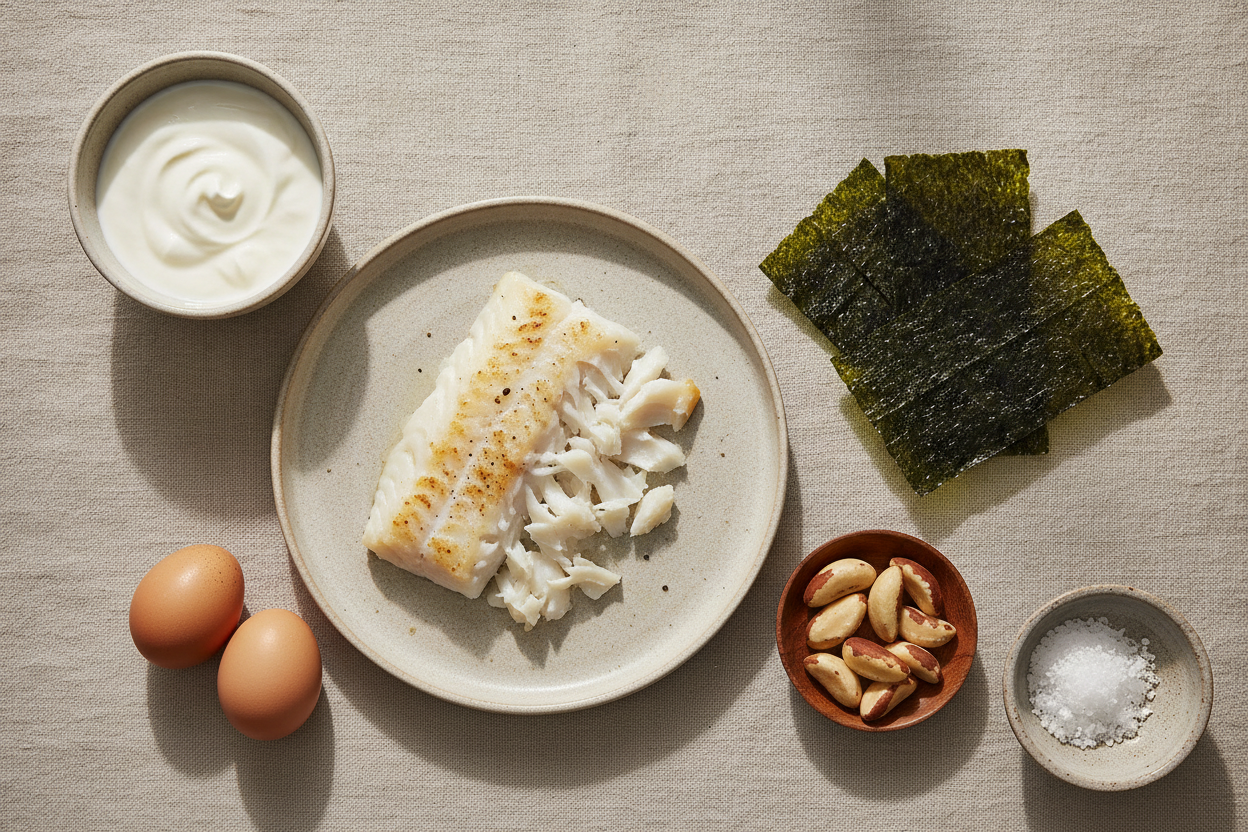
Iodine content in food varies a lot, because it depends on how much iodine was in the soil, the water or the animal feed. As a rough guide, from U.S. government data:
- Seaweed varies more than anything else. Kelp can hold many times a day's worth in a small serving; nori is generally much lower, but still variable.
- Fish and seafood. A 3 oz serving of baked cod supplies roughly 150 mcg, close to a full day's RDA.
- Dairy. A cup of milk or a serving of plain yogurt typically adds somewhere around 50 to 90 mcg.
- Eggs. One large egg holds about 30 mcg.
- Iodized salt. A quarter teaspoon provides about 75 mcg.
Most U.S. adults get a meaningful amount of iodine from this kind of ordinary food without thinking about it. That is the context the label number has to be read in.
So is 1,000 mcg too much?
The Foundations Women's label lists 1,000 mcg of iodine from potassium iodide in the Morning packet. On its own, that is about 91 percent of the 1,100 mcg adult upper limit. It leaves roughly 100 mcg of room for everything else you eat that day.
That room fills quickly. Using the figures above, a glass of milk and an egg come close to it, and a serving of cod goes past it. So for many people, taking the packet every day alongside a normal diet will put total iodine intake above the upper limit on most days, not just now and then.
The upper limit is set with a safety margin, so going over it is not an instant problem. But a routine that sits above it day after day is exactly the kind of thing to review with a professional rather than assume is fine.
Before you settle into a daily routine:
- Estimate what your food already supplies. Dairy, eggs, fish, seaweed and iodized salt are the big ones.
- Add every supplement. Kelp tablets, prenatal vitamins, other multivitamins and some "thyroid support" products all carry iodine. Check each label.
- Ask a healthcare professional whether this amount suits you, and share what you eat and what else you take. They can tell you whether a lower-iodine routine makes more sense for you.

How to take it
The label keeps this simple: take the entire Morning packet during the day with food and 8 oz of water. Breakfast is the natural fit. Taking the packet with a meal also helps the fat-soluble nutrients in it, such as vitamins D3, K2 and E, absorb better.
If you are pregnant or nursing, take any medication, or have a thyroid concern or an ongoing health condition, talk with a qualified healthcare professional before starting any supplement that contains iodine.
The takeaway
Iodine is the mineral the thyroid uses to make its hormones, and the body has to get all of it from outside. Adults need about 150 mcg a day, and the upper limit from all sources is 1,100 mcg. Foundations Women's Health Support provides 1,000 mcg in the Morning packet, close to that limit on its own, so most diets will take a daily total above it. Add up your sources and check with a healthcare professional before making it a daily habit.
These statements have not been evaluated by the Food and Drug Administration. This product is not intended to diagnose, treat, cure, or prevent any disease.