

Most people meet taurine on the side of an energy-drink can, printed right next to the caffeine. So when it turns up on the label of a daily energy supplement, the natural assumption is that it is there to give you a kick. It isn't. Taurine is not a stimulant, and the reason it belongs in an energy formula has very little to do with the buzz people associate with it.
What taurine actually is
Taurine is an amino acid, though an unusual one. Most amino acids are building blocks for protein. Taurine is not. It floats freely inside cells instead, and it is one of the most plentiful of these free amino acids in the body, with especially high levels in muscle, the heart, the brain and the eyes.
The name comes from the Latin taurus, for bull, because it was first isolated from ox bile in the 1820s. That bit of history is where the energy-drink branding comes from. It has nothing to do with strength.
Your body makes some taurine on its own, from two other amino acids, methionine and cysteine. The rest comes from food.
Where you get it from food
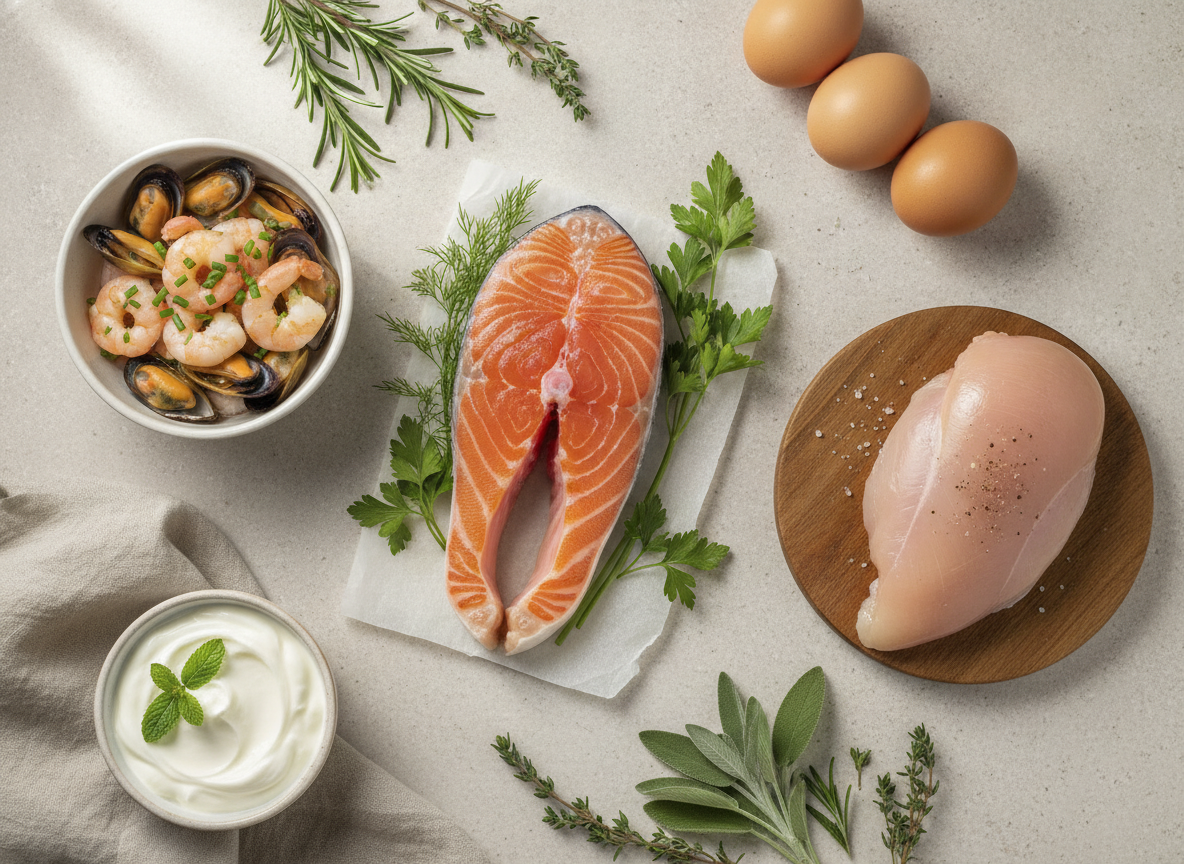
Taurine is found almost entirely in animal foods. Shellfish such as mussels, clams and scallops are among the richest sources, followed by fish, dark-meat poultry and other meats. Dairy and eggs carry small amounts. Plant foods contain very little.
That matters if you eat mostly plants, or if your appetite and portions have shrunk. Your body can still make taurine, but your intake from meals will be lower than someone who eats seafood several times a week.
What it does in the body
Taurine has several quiet, everyday jobs rather than one headline role:
- It helps cells manage their water and mineral balance. Taurine helps cells keep a steady volume and supports how they move minerals such as calcium in and out, which is part of how muscle cells contract and relax normally.
- It supports normal fat digestion. The liver attaches taurine to bile acids, and those bile salts help the gut break down and absorb dietary fat and fat-soluble vitamins.
- It supports the cell's energy machinery. Taurine is present inside mitochondria, the parts of the cell that turn food into usable energy, and it helps maintain the cell's normal defences against the oxidative stress that energy production creates.
None of those produce a sudden jolt. They are background processes, the kind that support steady energy over a day rather than a spike followed by a dip.
So why is it in energy drinks?
Energy drinks pair taurine with large amounts of caffeine and, usually, sugar. The lift you feel from a can comes from those two. Taurine is along for the ride, partly because of its name and partly because of its role in muscle. Taking taurine on its own will not make you feel wired.
That is a useful thing to know when you read a supplement label. Seeing taurine does not mean a formula is built to stimulate you.
Why it sits in the Enerivus energy blend
In Foundations Energy Health Support, taurine is part of the Enerivus™ Energy Blend, alongside alpha lipoic acid, ginseng extract and S7. The other ingredients in the formula, such as CoQ10, omega-3s and the adaptogens, work on related parts of the same picture: how cells produce energy and how the body handles everyday stress.
Taurine's place in that blend follows from what it does. It supports normal muscle function and the cell's own energy processes, and it does so without adding a stimulant to your day. It fits a formula meant for steady, everyday energy rather than a quick hit.

How to take it
- Follow the packet directions and take it at the same time each day. Consistency matters more than the exact hour for an ingredient like this.
- Drink water with it. Taurine helps cells manage fluid balance, and your body needs fluid to work with.
- Give a routine a few weeks. Ingredients that support everyday cellular processes work in the background, so judge the routine over a month rather than a single afternoon.
Who should check first
Taurine is a normal part of the diet and is generally well tolerated. Even so, talk with your healthcare provider before adding any supplement if you take prescription medication, particularly for blood pressure or mood, or if you are pregnant or nursing. Never stop or change a medication on your own because you have started a supplement.
The short answer
Taurine is an amino acid your body makes and gets from animal foods. It helps cells manage water and minerals, supports normal fat digestion and muscle function, and is present in the cell's energy machinery. It is not a stimulant, despite where most people first read the name. That is why it sits in the energy blend of Foundations Energy Health Support: to support steady energy, not to give you a buzz.
These statements have not been evaluated by the Food and Drug Administration. This product is not intended to diagnose, treat, cure, or prevent any disease.