

You read down the label of a daily gut formula. Probiotics, digestive enzymes, prebiotic fiber, psyllium husk. All of that makes sense. Then there is licorice root, and the first thing most people picture is a twist of black candy.
The candy has very little to do with it. Licorice root is one of the oldest plants in digestive tradition, and it earns its place in a gut formula for reasons that have nothing to do with flavor. It also contains one compound that is worth understanding before you take it every day. Here is the plain version, using Foundations Gut Health Support as the example.
What licorice root actually is
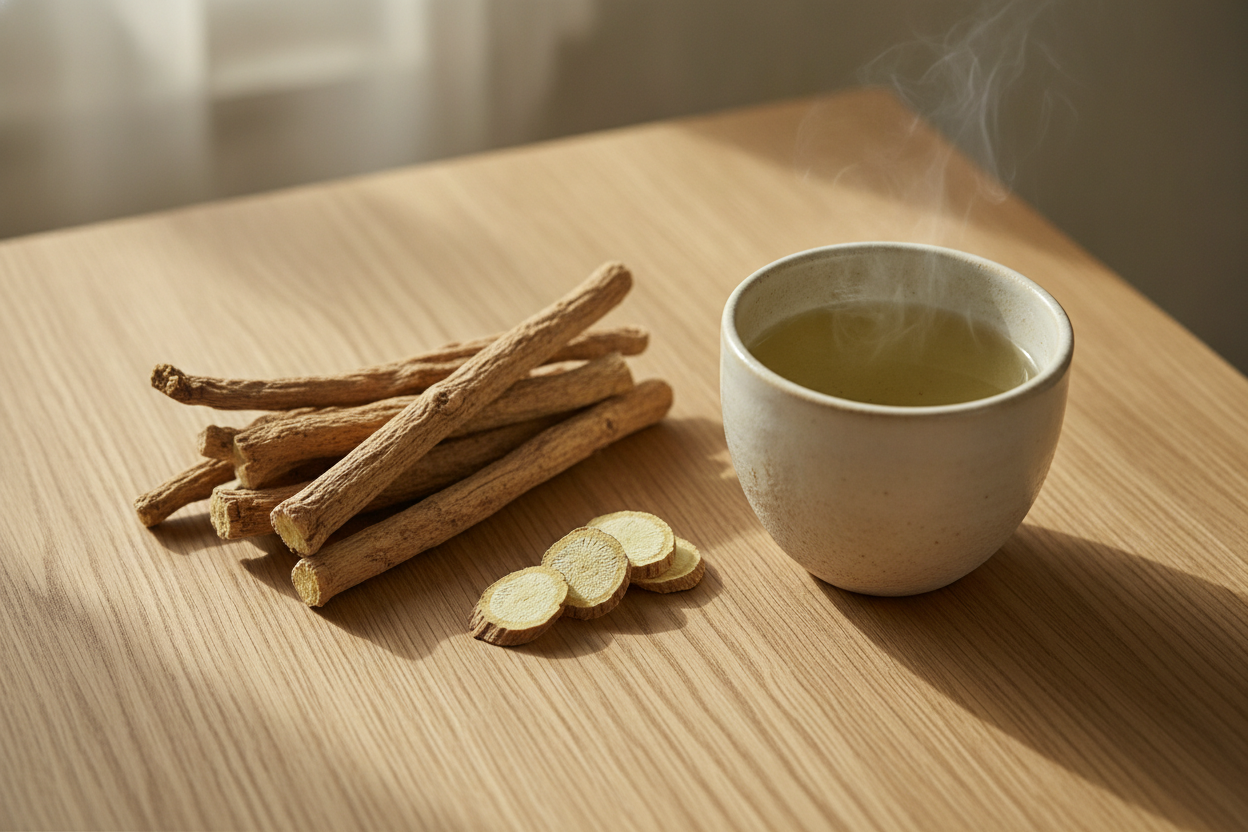
Licorice is the root of Glycyrrhiza glabra, a leafy plant in the pea family that grows across southern Europe and western Asia. The root is woody and fibrous, with a yellow interior, and it is naturally sweet. The name Glycyrrhiza comes from the Greek for "sweet root".
Here is a detail that surprises people: a lot of black licorice candy sold in the U.S. is flavored mostly with anise oil, which tastes similar, rather than with much real licorice. The root in a supplement is the actual plant.
Why it shows up in gut formulas
Licorice root has been part of digestive routines in traditional European, Middle Eastern and Chinese practice for centuries. People steeped it as a tea after heavy meals, or chewed the root for stomach comfort.
Modern interest centers on the compounds the root carries, including flavonoids and soothing, plant-derived substances that are thought to help support the stomach's natural protective lining. That is why it tends to appear in formulas built around everyday digestive comfort, rather than in energy or focus products.
In the Foundations Gut Health formula, licorice root sits alongside a much larger system: digestive enzymes that help break down proteins, fats, dairy sugars and plant fibers, a multi-strain probiotic blend, prebiotic FOS and psyllium husk fiber. Licorice is not the engine of that formula. Its job is a supporting one, adding a traditional comfort ingredient to a routine whose heavy lifting is done by the enzymes, probiotics and fiber.
The compound worth knowing about: glycyrrhizin
The sweetness in licorice root comes mostly from a compound called glycyrrhizin, which is many times sweeter than sugar. It is also the reason licorice deserves a little respect.
In large amounts taken over time, glycyrrhizin can lead the body to hold on to sodium and lose potassium. That shift can raise blood pressure and affect how the heart and muscles work. The U.S. Food and Drug Administration has warned that adults over 40 who eat around two ounces of real black licorice a day for at least two weeks could run into heart rhythm trouble. The risk depends on the amount and how long it is taken.
Because of this, licorice is often sold in a second form called DGL, short for deglycyrrhizinated licorice. DGL is licorice root with most of the glycyrrhizin removed, so it keeps much of the root's traditional digestive use while dropping most of the compound linked to these effects.
So when you see licorice root on any label, two questions are worth asking:
- How much is in a serving? A small amount in a multi-ingredient formula is a very different thing from a large standalone dose or a daily handful of real licorice candy.
- Which form is it? The Supplement Facts panel will say if the licorice is DGL. If it simply says licorice root or licorice extract, assume it contains glycyrrhizin and count it alongside any other licorice you eat or drink, including licorice teas.
Who should check with a professional first
Licorice root is a familiar plant, but it is not the right fit for everyone. Talk to a qualified healthcare professional before taking any product that contains it if any of these apply to you:
- You have been told to watch your blood pressure, your potassium levels or your heart health.
- You take a prescription medication, especially a diuretic ("water pill"), a blood pressure medication, a corticosteroid, a heart medication or a blood thinner. Licorice can interact with several of these.
- You are pregnant or nursing. Large amounts of licorice are generally advised against during pregnancy.
- You already drink licorice tea or eat real black licorice regularly.
- You have an ongoing kidney or liver concern you are working through with a clinician.
Keep taking your medications as prescribed, and let your provider decide how a supplement fits around them. Bring the Supplement Facts panel with you so they can see the exact amount and form.

How to take it
The Foundations Gut Health routine is one daily packet, taken with food and water as directed on the label. Taking it with a meal is the natural fit for a formula built around digestion, since the enzymes in the same packet are there to work alongside your food.
A few habits help:
- Take it at the same meal each day. Breakfast or lunch works well for most people.
- Drink enough water through the day. That matters for any routine with psyllium fiber in it.
- Do not double up to make up for a missed day. Just pick up again with the next meal.
The short answer
Licorice root is the sweet, fibrous root of Glycyrrhiza glabra, used for centuries in digestive routines and included in a gut formula to support everyday digestive comfort alongside enzymes, probiotics and fiber. Its natural sweetener, glycyrrhizin, is the part worth respecting: in large amounts over time it can affect blood pressure and potassium, which is why DGL exists and why some people should check with a professional first. Read the label for the amount and form, and if any of the points above apply to you, ask before you start Foundations Gut Health Support.
These statements have not been evaluated by the Food and Drug Administration. This product is not intended to diagnose, treat, cure, or prevent any disease.