

You are reading the label on a digestive supplement, running down the ingredient list, and you hit a word that stops you cold: alpha-galactosidase. It is a mouthful, it sounds clinical, and it is easy to skip. But it is one of the more interesting ingredients in a well-built gut formula, because it does one very specific job that no other common digestive enzyme does.
Here is the plain-language guide to what alpha-galactosidase is, why beans and vegetables are the foods it is matched to, and how it fits into a daily routine.
The problem starts with a carbohydrate you can't digest
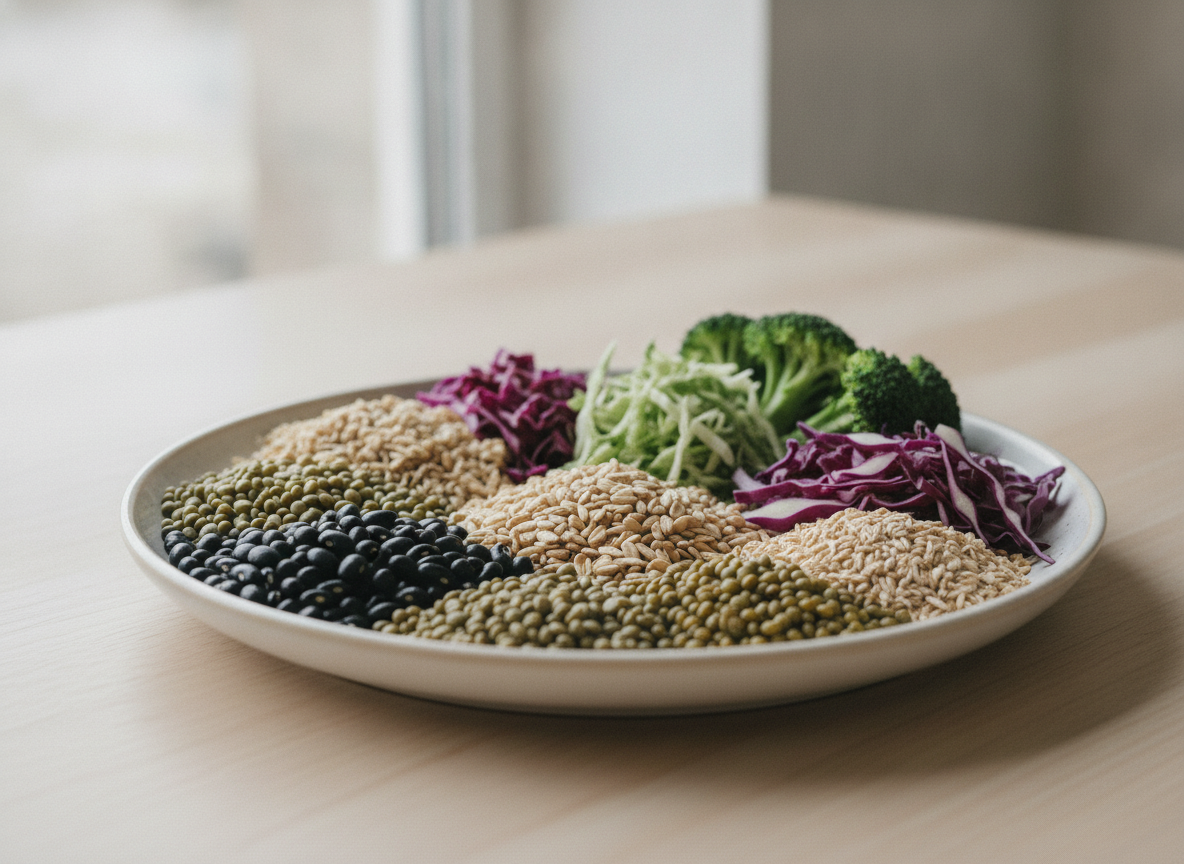
Beans, lentils, chickpeas, broccoli, cabbage, Brussels sprouts and whole grains all contain a family of carbohydrates called galacto-oligosaccharides — GOS for short — along with related sugars like raffinose, stachyose and verbascose. They are the reason these foods have their well-earned reputation.
The catch is that the human small intestine does not make an enzyme to break these particular sugars apart. So they travel undigested all the way to the large intestine, where the resident gut bacteria feed on them like a feast. As those bacteria ferment the sugars, they produce gas — and that is the familiar heavy, bloated feeling that can follow a hearty bean chili or a big plate of roasted vegetables.
It is worth saying plainly: these are healthy foods. Fiber-rich legumes and cruciferous vegetables are some of the best things on most people's plates. The gas is not a sign that anything is wrong — it is simply a by-product of carbohydrates your own digestion can't reach.
What alpha-galactosidase actually does
Alpha-galactosidase is the enzyme your small intestine doesn't make. Supplied in a supplement, it does the one thing the body can't: it helps break those complex GOS carbohydrates down into simpler sugars before they reach the bacteria in the large intestine.
Break the carbohydrate apart earlier in the process, and there is less of it left over to ferment further down. That is the whole mechanism — and it is why alpha-galactosidase is matched so specifically to beans and vegetables rather than to, say, a fatty or a dairy-heavy meal. It is the enzyme that targets the exact carbohydrate those particular foods are rich in.
You may recognize the approach even if the enzyme name is new to you: alpha-galactosidase is the active ingredient in the well-known over-the-counter products people take before a bean-heavy meal. In a daily formula, it is simply built into the routine rather than kept in a bottle for occasional use.

Why it travels with other enzymes
A single meal is rarely just one macronutrient, which is why alpha-galactosidase rarely works alone. In a full digestive blend it sits alongside enzymes that each handle a different job:
- Protease works on proteins.
- Lipase works on fats.
- Lactase works on the sugar in dairy.
- Bromelain and papain (from pineapple and papaya) add broad protein-digesting support.
- Alpha-galactosidase covers the gas-forming carbohydrates in beans and vegetables that the others leave untouched.
Think of it as a set of specialized tools rather than one all-purpose one. Each enzyme is matched to a component of the meal, and alpha-galactosidase is the specialist for the one category most likely to leave you feeling heavy.
Our Foundations Gut Health Support is built around exactly this idea: its Enzynera™ complex pairs alpha-galactosidase with protease, bromelain, papain, lipase and lactase, so a mixed meal is met with the right tool for each part of it.
How to fit it into a routine
Because enzymes act on food as it is being digested, a digestive blend is generally taken with meals — ideally the ones most likely to include the foods it is matched to. If your heaviest bean-and-vegetable meal is dinner, that is the natural time for it. Taken consistently with meals, it becomes a quiet part of the routine rather than something you reach for only after the fact.
A reasonable way to think about it: alpha-galactosidase does not change what you should eat. It is there so that the fiber-rich, plant-forward foods that are good for you can stay on the menu comfortably.
The short version
Alpha-galactosidase is the enzyme that goes to work on the specific carbohydrates in beans, lentils and cruciferous vegetables that human digestion can't break down on its own. By helping break those carbohydrates down earlier, it supports more comfortable digestion of exactly the foods most likely to leave you feeling gassy and heavy — which is why you will find it, alongside a lineup of other targeted enzymes, in a well-designed daily gut formula.
These statements have not been evaluated by the Food and Drug Administration. This product is not intended to diagnose, treat, cure, or prevent any disease.