

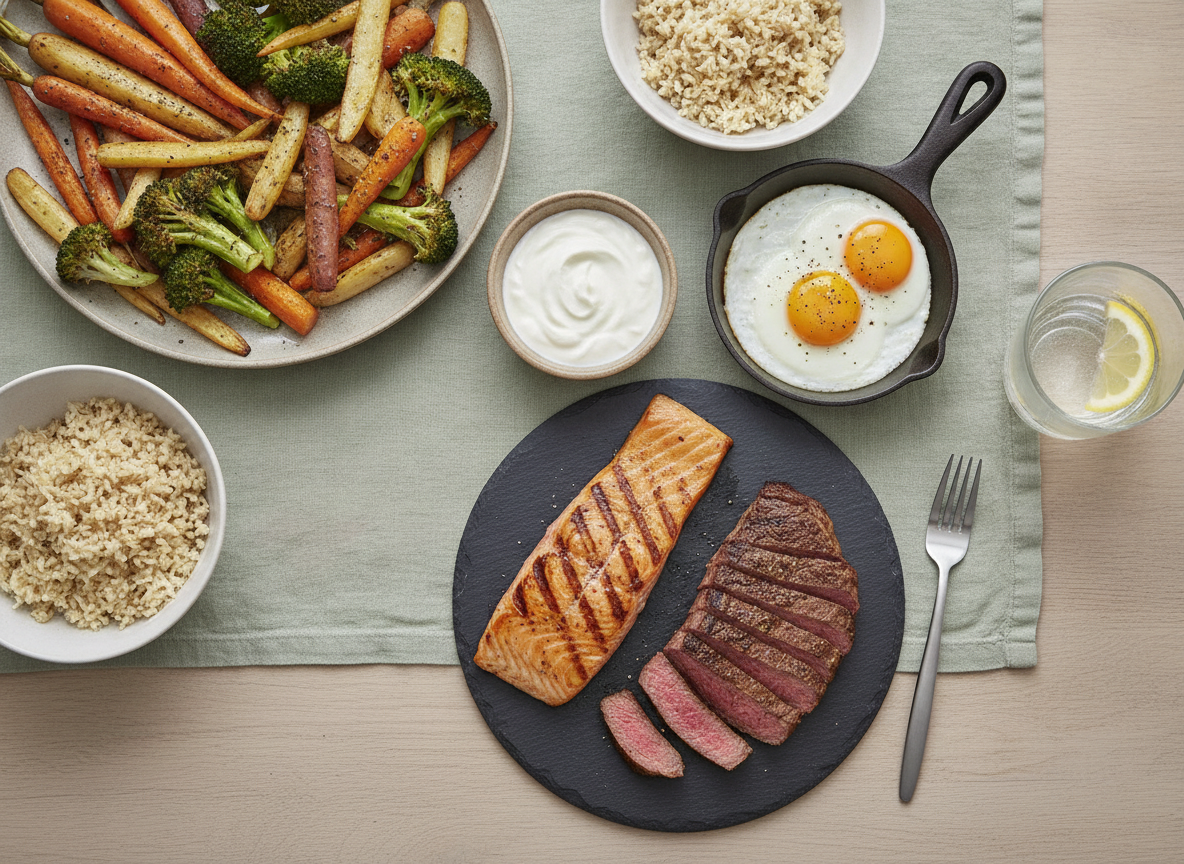
You eat well. Eggs in the morning, chicken or fish at lunch, a steak or a bowl of Greek yogurt later on. Then you read the label on a gut health supplement and find two names that sound more like a fruit stand than a formula: bromelain and papain.
They are not there for flavor. Both are enzymes that work on protein, and they come from two fruits most of us already know. This is what each one does, why a daily formula pairs them, and who should talk to a healthcare provider before taking them.
How your body handles protein on its own
Protein is a long chain of building blocks called amino acids. Before your body can absorb it, that chain has to be cut into much smaller pieces. Your own digestion does this in stages. Pepsin starts the job in the stomach, and enzymes from the pancreas carry on in the small intestine.
Most of the time that system copes well. A big protein-heavy dinner simply gives it more to do, and a heavy, overly full feeling after that kind of meal is common. That is the gap a supplemental protein enzyme is meant to fill. It adds a little extra help at the start of the process, alongside your own enzymes rather than in place of them.
Bromelain: the enzyme from pineapple
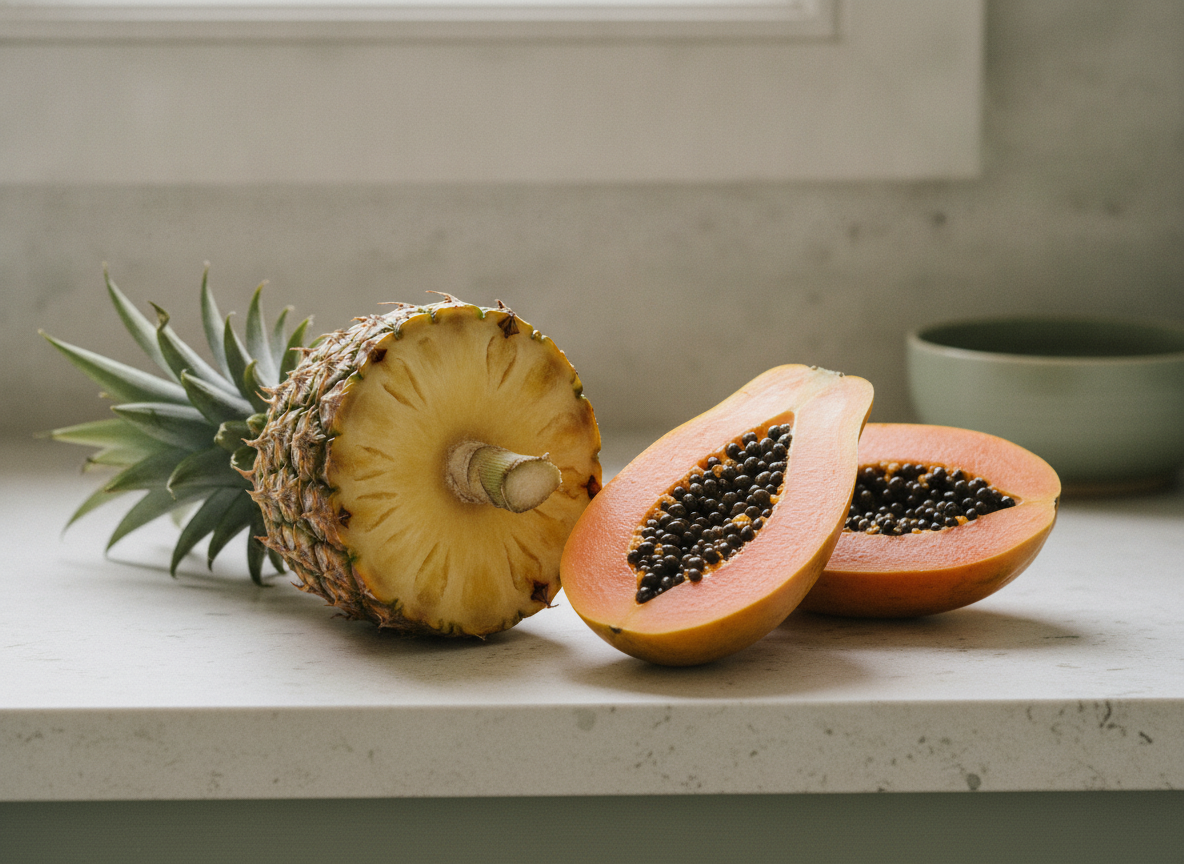
Bromelain is a group of protein-splitting enzymes taken mainly from the stem and core of the pineapple plant. It belongs to a family called cysteine proteases, which cut protein chains at many points along their length.
One reason it is useful in a capsule is that fresh pineapple is not a reliable source. Bromelain is sensitive to heat, so canned and cooked pineapple carry very little of it. That same activity is why fresh pineapple can make your mouth tingle, and why it turns gelatin desserts runny. A supplement supplies a measured, consistent amount without you having to eat fruit at every meal.
Papain: the enzyme from papaya
Papain comes from papaya, mostly from the milky latex of the unripe fruit. It is also a cysteine protease, and it is the active ingredient in many powdered meat tenderizers. Sprinkled on a tough cut of beef, it starts loosening the protein before the meat ever reaches the pan.
In a digestive blend, papain does a similar job on the protein in a meal you have already eaten. It helps break long chains into shorter pieces that your own enzymes can finish.
Why a formula uses both
If they do similar work, why include two? Because they are not identical. Each enzyme prefers slightly different spots on a protein chain, and each is active across a different range of acidity. Pairing them gives broader coverage than either one alone, which matters because a real meal holds many different proteins, from meat and fish to dairy, eggs and legumes.
Neither works alone in a well-built gut formula, either. In the Foundations Gut Health Support protocol, bromelain and papain sit inside the Enzynera™ enzyme complex next to protease (more protein support), lipase for fats, lactase for the sugar in dairy, and alpha-galactosidase for the carbohydrates in beans and vegetables. The two fruit enzymes are the protein specialists in that group.
When to take them
Enzymes work on food that is actually there, so a digestive blend belongs with meals. The Foundations Gut Health Support routine is a daily packet taken with food and water, as directed on the label. If your largest protein meal comes at a different time of day, food is still the thing to pair it with. An enzyme taken on an empty stomach has nothing to work on.
Consistency counts for more than perfect timing. Taken with food every day, the enzymes become part of how you eat instead of something you only remember after a heavy dinner.
Who should check first
Bromelain and papain come from food, but that does not make them right for everyone. Talk to your healthcare provider before starting if any of these apply to you:
- You are allergic to pineapple, papaya, latex, or kiwi. These allergies can overlap.
- You take a prescription medication, including any blood thinner.
- You are pregnant or nursing.
- You have a scheduled surgery coming up.
Keep taking your medications as prescribed, and let your provider decide how a supplement fits around them.
The short answer
Bromelain from pineapple and papain from papaya both help break down protein. Each cuts protein chains in a slightly different way, so together they cover more of what is on your plate. In a daily gut formula they work alongside your own digestive enzymes to support comfortable digestion of protein-rich meals, as one part of a wider enzyme team.
These statements have not been evaluated by the Food and Drug Administration. This product is not intended to diagnose, treat, cure, or prevent any disease.