

It's a fair question, and a smart one to ask. If your GLP-1 medication has already taken the edge off your hunger, reaching for a daily supplement aimed at cravings can feel redundant. You're already eating less — so why bother with chromium, cinnamon, or berberine?
The short answer is that appetite and cravings aren't quite the same experience, and these ingredients work on a different part of the picture than your medication does. Let's walk through it plainly.
Appetite and cravings aren't the same thing
Appetite is the big-picture sense of how much you want to eat — the general "I could eat" feeling, the plate you leave half-finished, the snack you forget about. That's largely where GLP-1 medications do their work, acting on satiety signaling so fullness arrives sooner and stays longer. If that feels dialed down for you, that's the medication doing what it does.
Cravings are a different animal. They're the specific mid-afternoon pull toward something sweet or starchy, often paired with an energy dip — the 3 p.m. tug toward a cookie even when you're not especially hungry. That pattern tends to track with how steadily your body handles glucose across the day, which is a separate lever from overall hunger. So you can have a well-managed appetite and still notice those smaller, glucose-linked nudges.

What chromium, cinnamon, and berberine are for
This is the gap a targeted daily blend is aimed at — not at hunger, but at the day-to-day steadiness underneath it. Each of these ingredients is associated with supporting healthy glucose metabolism and steady energy:
- Chromium picolinate — associated with supporting normal macronutrient and glucose metabolism.
- Cinnamon extract — traditionally used, and associated with supporting healthy glucose metabolism.
- Berberine — associated with supporting healthy glucose metabolism.
These three sit at the center of Foundations GLP-1 Health Support, a 30-day daily protocol that combines a Berberine Complex, Chromium Picolinate, and Cinnamon Extract with digestive and enzyme blends, probiotics, adaptogens, an Incretiva™ GLP-1 Blend, B-vitamins, minerals, and antioxidants. The idea isn't to add another appetite signal on top of your medication — it's to support the steady-glucose side that cravings tend to ride on.
Why this matters more when you're eating less
Here's the part that's easy to miss. When you're on a GLP-1 and eating meaningfully less overall, the nutritional quality of what you do eat matters more, not less. Smaller plates leave less room for the everyday basics — the B-vitamins and minerals that ordinary meals usually cover without you thinking about it.
That's why a support formula pulls double duty: the glucose-metabolism ingredients on one side, and a foundation of B-vitamins, minerals, and antioxidants on the other, helping you keep covering the basics on days when you're simply eating a lot less.
Fitting it into a daily routine
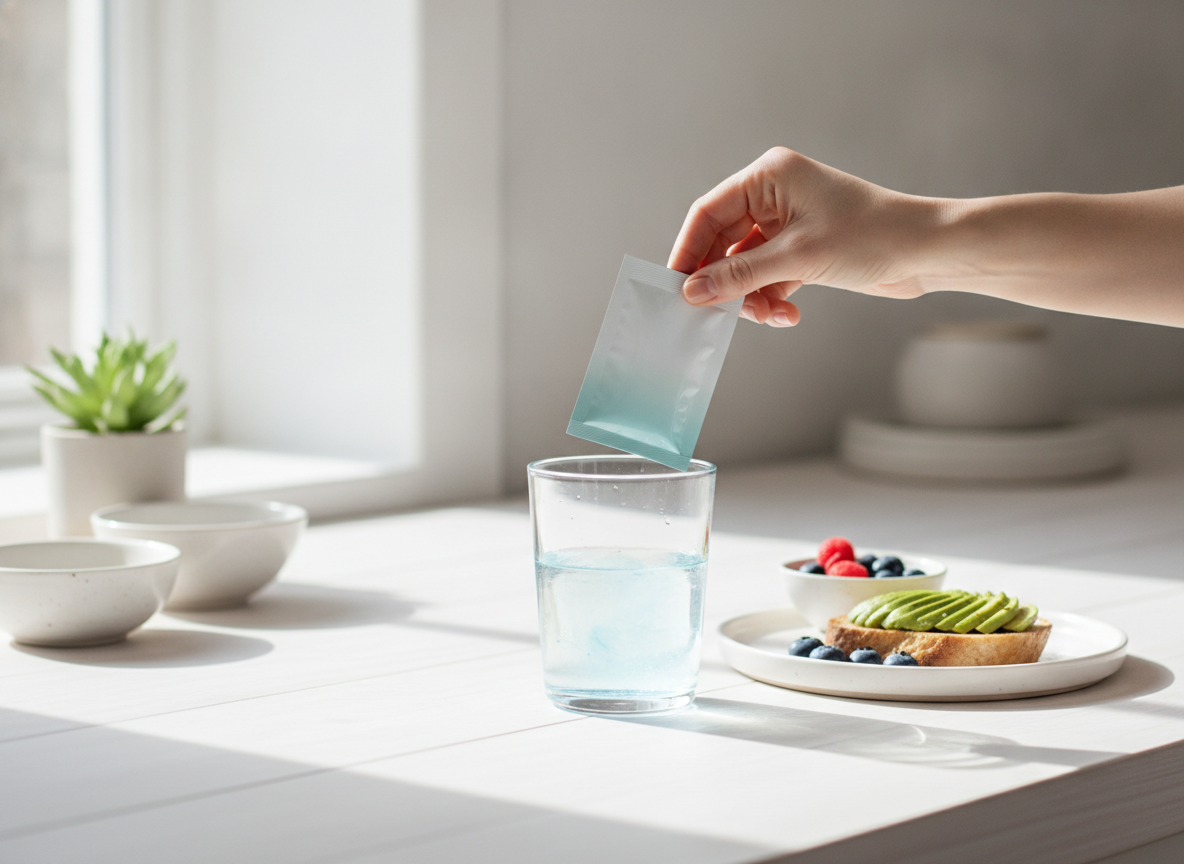
Consistency is the whole game here. A blend like this is built to be taken daily, ideally with food and worked into your morning so it becomes automatic rather than something you have to remember.
One thing worth being clear about: Foundations GLP-1 Health Support is meant to complement your routine, not to replace anything in it. It isn't a substitute for your medication, your meals, or your clinician's guidance. If you have questions about how a daily supplement fits with your personal routine or your prescription, that's a good conversation to have with your healthcare provider.
So, back to your question
Your medication is doing its job on appetite. Chromium, cinnamon, and berberine are aimed at a neighboring one — the glucose-linked steadiness and everyday nutrition that sit underneath the cravings and the afternoon dips. That's why the two can sit side by side rather than overlap.
These statements have not been evaluated by the Food and Drug Administration. This product is not intended to diagnose, treat, cure, or prevent any disease.